
Nutrition facts
Calories in red wine
The glass at dinner, weighed like the rest of the table, because alcohol counts too: this page measures, it recommends nothing.
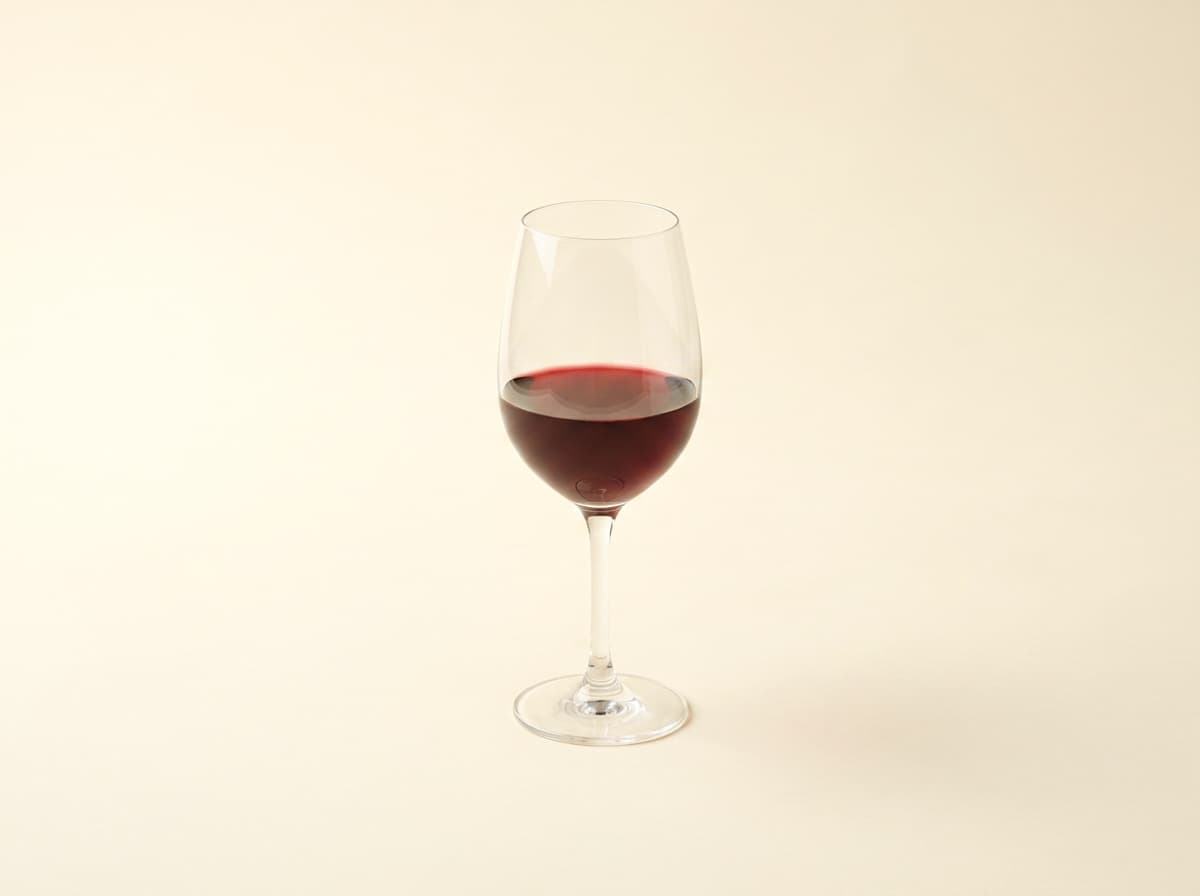
What a real portion weighs
The Anses table gives values per 100 grams, and 100 grams is not a portion anybody serves. Here are the same values, applied to the portions as they turn up. Weights are in grams, the unit the table is built on. For a quick conversion: 1 oz is about 28 g, and 1 lb is about 454 g.
| Portion | Weight | Energy | Protein | Carbs | Fat | Fiber |
|---|---|---|---|---|---|---|
| A small glass · 12.5 cl, a standard European pour | 125 g | 95 kcal | 0.2 g | 0 g | 0 g | 0 g |
| A large glass · 15 cl | 150 g | 114 kcal | 0.2 g | 0 g | 0 g | 0 g |
Where these weights come from. Volumes are converted to grams at one gram per milliliter, as for beer: the density of wine is very close to it. The two pours above are European measures; the US standard drink is 5 fl oz, about 148 ml, which sits between the two.
Composition per 100 grams
Wine, red
- Energy
- 76 kcal
- Protein
- 0.2 g
- Carbohydrate
- 0 g
- of which sugars
- 0 g
- Fat
- 0 g
- Fiber
- 0 g
- Sodium
- 0 mg
Red wine vs beer
Two evening glasses, two very different volumes for neighboring energies: wine concentrates what beer stretches out.
| Food | Energy | Protein | Carbs | Fat | Fiber |
|---|---|---|---|---|---|
| Red wine | 76 kcal | 0.2 g | 0 g | 0 g | 0 g |
| Beer | 39 kcal | 0.4 g | 3.1 g | 0 g | 0 g |
Weight for weight, red wine: 94% more energy.
What a table of values does not say
- The energy of a wine comes first from its alcohol: the higher the degree, the more the glass weighs in the journal, and residual sugar only follows.
- The bourguignon of the catalog holds a share of it: cooking drives off part of the alcohol, and the table of the dish accounts for that.
The Zemiam recipe that uses it
These pages carry their calories and their macros, recalculated from the same table as this one. The weight given is that of the ingredient in one serving.
- Beef bourguignon with potatoes · 100 g per serving
What comes after the number
How much to eat in a day
A portion means nothing without the day that holds it. A calorie need is worked out from height, weight, age and activity level, then split into protein, carbohydrate and fat.
Calorie calculatorWhere body build sits
Body mass index, the full WHO classification, and the weight range matching a normal build for a given height.
BMI calculatorNeighboring pages
An average weight is an estimate. A photo is not.
In Zemiam, a photo of the meal is enough to log the real portion, with the composition of this same table rather than a guessed figure.
Where the values come from
The composition comes from the Anses Ciqual table: Anses. 2025. Table de composition nutritionnelle des aliments Ciqual, published under Licence Ouverte 2.0. The per-100 g values are reproduced without being altered; the per-portion values are those same values multiplied by a weight, and that weight is not an Anses figure.
The same page in French: Calories du vin rouge.