
Nutrition facts
Calories in olive oil
The fat behind every vinaigrette and half the pans of this site: the spoon is the portion that changes a salad in the journal.
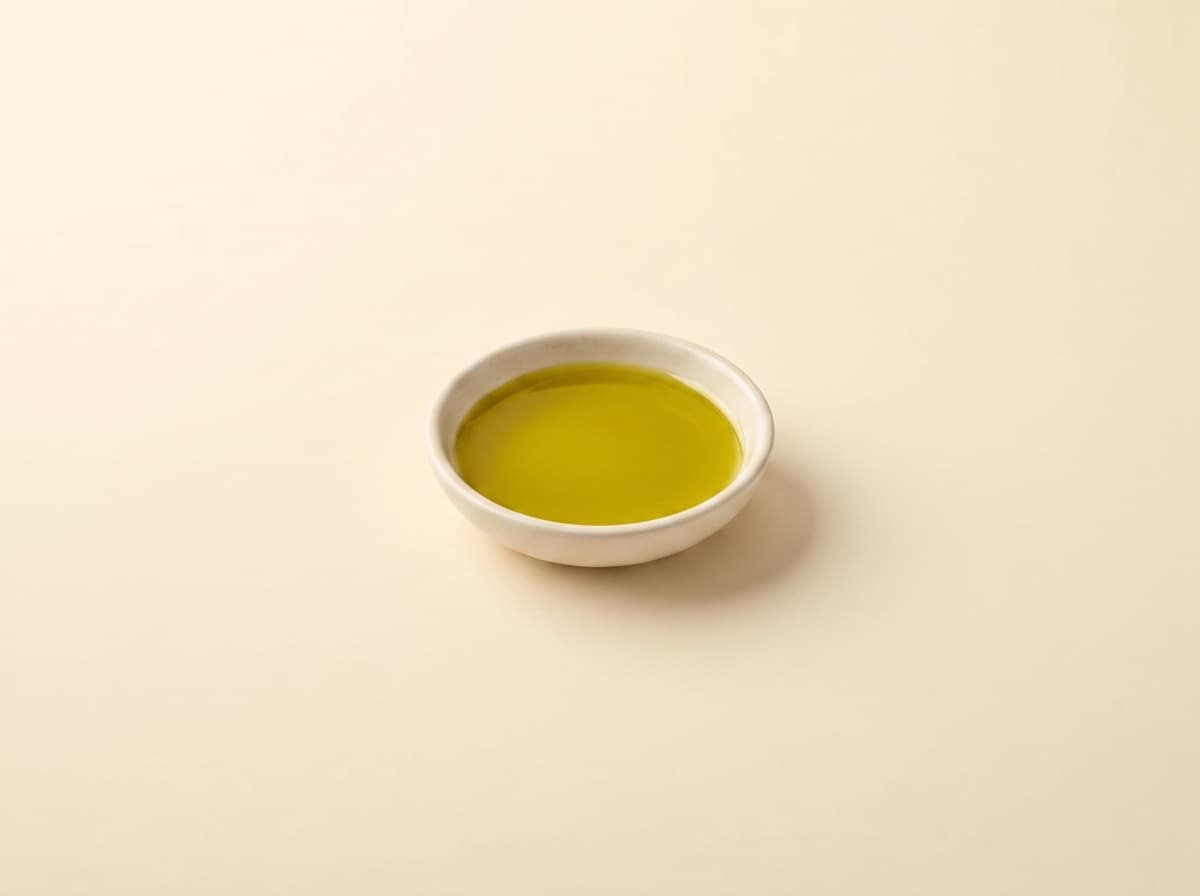
What a real portion weighs
The Anses table gives values per 100 grams, and 100 grams is not a portion anybody serves. Here are the same values, applied to the portions as they turn up. Weights are in grams, the unit the table is built on. For a quick conversion: 1 oz is about 28 g, and 1 lb is about 454 g.
| Portion | Weight | Energy | Protein | Carbs | Fat | Fiber |
|---|---|---|---|---|---|---|
| One tablespoon | 14 g | 126 kcal | 0 g | 0 g | 14 g | 0 g |
| One teaspoon | 5 g | 45 kcal | 0 g | 0 g | 5 g | 0 g |
Where these weights come from. Volume to mass: oil weighs slightly less than water at equal volume, so a 15 ml tablespoon holds fourteen grams. A US tablespoon holds 14.8 ml, close enough that the figure in grams does not move.
Composition per 100 grams
Olive oil, extra virgin
- Energy
- 899 kcal
- Protein
- 0.3 g
- Carbohydrate
- 0 g
- of which sugars
- 0 g
- Fat
- 99.9 g
- Fiber
- 0 g
- Sodium
- 0 mg
What a table of values does not say
- An oil carries nothing but fat, the only thing in the kitchen that does: nothing is denser in energy.
- Extra virgin speaks about taste and extraction, not about density: by the spoonful all oils are level.
The Zemiam recipes that use it
These pages carry their calories and their macros, recalculated from the same table as this one. The weight given is that of the ingredient in one serving.
- Grilled chicken with rice and greens · 5 g per serving
- Roasted salmon with green beans and lemon · 5 g per serving
- Lentil salad with tomato and red onion · 8 g per serving
- Pasta with tomato sauce and basil · 5 g per serving
- Steamed cod with quinoa and broccoli · 5 g per serving
- Beef stir-fry with peppers and rice · 6 g per serving
- Chicken salad with avocado and cherry tomatoes · 5 g per serving
- Leek, carrot and potato soup · 4 g per serving
- Chili con carne · 5 g per serving
- Chickpea curry with basmati rice · 8 g per serving
- Zucchini gratin with cheese · 5 g per serving
- Turkey cutlet with sweet potato and spinach · 5 g per serving
- Homemade margherita pizza · 8 g per serving
- Homemade burger with oven-roasted potatoes · 5 g per serving
- Croque monsieur with green salad · 5 g per serving
- Spaghetti bolognese · 5 g per serving
- Homemade chicken kebab with white sauce · 5 g per serving
- Pasta salad with tuna and sweet corn · 8 g per serving
- Fried rice with eggs and peas · 5 g per serving
- Ham and cheese omelet with salad · 5 g per serving
- Quinoa salad with chicken, cucumber and feta · 8 g per serving
- Pan bagnat with tuna · 8 g per serving
- Quiche lorraine with green salad · 5 g per serving
- Minestrone · 8 g per serving
- Beef and mashed potato bake with salad · 5 g per serving
- Sausages with lentils · 5 g per serving
- Chicken breast with green lentils and broccoli · 6 g per serving
- Tuna with quinoa and green beans · 7 g per serving
- Veal cutlet with spinach and white beans · 6 g per serving
- Sauteed shrimp with brown rice and peas · 6 g per serving
- Smoked salmon with hard-boiled eggs and arugula · 5 g per serving
- Turkey with chickpeas and peppers · 6 g per serving
- Beef patty with white beans and arugula · 6 g per serving
- Cod with red lentils and spinach · 6 g per serving
- Smoked tofu with quinoa and broccoli · 6 g per serving
- Fried rice with shrimp and peas · 8 g per serving
- Chicken breast with polenta and zucchini · 6 g per serving
- Roasted trout with sweet potato and green beans · 5 g per serving
- Rice salad with tuna and sweet corn · 8 g per serving
- Beef steak with sweet potato mash and arugula · 6 g per serving
- Turkey stir-fry with rice vermicelli and vegetables · 7 g per serving
- Cod with basmati rice and spinach · 6 g per serving
- Cauliflower and potato veloute · 5 g per serving
- Scrambled eggs with avocado and cherry tomatoes · 4 g per serving
- Cheese omelet with tomato and cucumber · 6 g per serving
- Mushroom and parmesan risotto · 8 g per serving
- Shakshuka with eggs, tomato and pepper · 6 g per serving
- Cauliflower gratin with cheese · 5 g per serving
- Quinoa salad with feta and cucumber · 8 g per serving
- Pumpkin and potato veloute with parmesan · 4 g per serving
- Pan-fried white beans with tomato and arugula · 8 g per serving
- Whole wheat pasta with zucchini and parmesan · 7 g per serving
- Beet salad with feta and walnuts · 7 g per serving
- Red lentil dahl with basmati rice · 8 g per serving
- Grilled tofu with peppers and rice vermicelli · 8 g per serving
- Chili sin carne with kidney beans and sweet corn · 6 g per serving
- Sweet potato and spinach curry with rice · 8 g per serving
- Quinoa bowl with avocado and beet · 7 g per serving
- White bean soup with carrot and leek · 5 g per serving
- Pan-fried chickpeas with peppers and zucchini · 8 g per serving
- Quinoa tabbouleh with tomato and cucumber · 8 g per serving
- Brown rice with broccoli and toasted almonds · 7 g per serving
What comes after the number
How much to eat in a day
A portion means nothing without the day that holds it. A calorie need is worked out from height, weight, age and activity level, then split into protein, carbohydrate and fat.
Calorie calculatorWhere body build sits
Body mass index, the full WHO classification, and the weight range matching a normal build for a given height.
BMI calculatorNeighboring pages
An average weight is an estimate. A photo is not.
In Zemiam, a photo of the meal is enough to log the real portion, with the composition of this same table rather than a guessed figure.
Where the values come from
The composition comes from the Anses Ciqual table: Anses. 2025. Table de composition nutritionnelle des aliments Ciqual, published under Licence Ouverte 2.0. The per-100 g values are reproduced without being altered; the per-portion values are those same values multiplied by a weight, and that weight is not an Anses figure.
The same page in French: Calories de l'huile d'olive.